Winter is finally over, and your roof has endured weeks of freezing, thawing, ice, and snow. But did it come through unscathed? In Quebec, the freeze-thaw cycle is one of the most damaging forces a roof faces — and the damage it causes isn’t always visible at first glance.
Every year, thousands of Quebec homeowners wait too long to act. The result: minor repairs that would have cost a few hundred dollars turn into full roof replacements. Here’s how to avoid that scenario by knowing exactly what to look for as soon as spring arrives.
Why Freeze-Thaw Cycles Are Your Roof’s Worst Enemy in Quebec
When water seeps into microcracks in roofing materials, it freezes and expands. With each cycle, those cracks get a little wider — and according to René Perron Couvreurs, a well-maintained roof can last 25 years, versus only 15–20 if maintenance is neglected (Toitures Aubin).
Visible Signs of Damage to Watch for This Spring
Before you think about calling a professional, you can do a first visual inspection from the ground — without ever getting up on the roof yourself.
Lifted, Cracked, or Missing Shingles
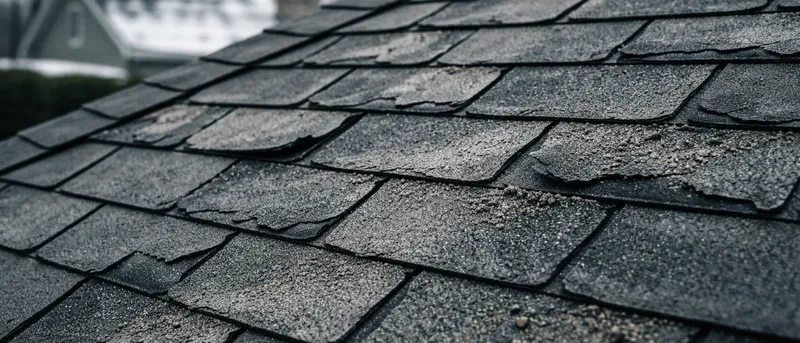
Look closely at your roof surface. Shingles that are curling at the corners, showing visible cracks, or simply missing are red flags. Those exposed areas allow water to seep directly into the structure.
Damaged Gutters, Flashings, and Valleys
Check your gutters: if you find grayish granules (the small gravel that coats asphalt shingles), that’s a sign of advanced wear. Granules protect shingles from UV rays — when they disappear, aging accelerates.
Also inspect the flashings around your chimney, vents, and dormers. These junction points are the most vulnerable to water infiltration.
Water Infiltration in the Attic or on Interior Walls
Once inside, head up to the attic with a flashlight. Look for yellow stains, moisture marks, or mold on the beams and interior sheathing. If you see signs inside, the damage is already well advanced — act immediately.
When Should You Call an RBQ-Certified Roofer?
If you notice any of the following, don’t wait to contact a professional:
- Missing, lifted, or cracked shingles in multiple areas
- Advanced shingle wear (widespread granule loss across the entire roof surface)
- Moisture marks or mold in the attic
- Loose or rusted flashings around the chimney or dormers
- General uncertainty about your roof’s condition after a particularly harsh winter
In Quebec, all roofing work must be performed by a contractor holding an RBQ license. This is a legal requirement. Before hiring a roofer, verify their license on the Régie du bâtiment du Québec website.
Repair or Replace: How to Decide?
This is often the hardest question for a homeowner. A qualified roofer will give you an informed opinion, but here are some useful guidelines:
- Targeted repair: if damage is localized (a few missing shingles, a loose flashing) and the rest of the roof is in good shape, a repair is usually the right call.
- Partial or full replacement: if shingles show widespread wear, if granules are disappearing across the whole surface, or if the roof is nearing the end of its useful life (15–25 years for asphalt shingles), replacing is often more cost-effective than patching.
A common mistake: applying sealant to shingles that are too far gone to be saved. This temporary fix delays the inevitable while making the underlying damage worse.
Don’t let spring rains finish what winter started. Find a certified professional near you on Neat
Conclusion
Spring in Quebec is the right time to take a fresh look at your roof. A quick visual inspection from the ground can save you from costly surprises in the months ahead. And if you have any doubt, an RBQ-certified roofer can assess the situation in just a few minutes.
Post your project on Neat — local contractors respond directly