Quebec’s lawn care season is short. The moment the snow disappears, the clock starts — and the first few weeks are critical. A lawn that gets off to a bad start in May can struggle all summer.
Yet many homeowners aren’t sure exactly when to act, how often to water, or how to spot the early signs of an insect infestation. This guide gives you a clear calendar for Quebec, from snowmelt to fall.
The First Steps After Snowmelt
As soon as the snow has melted and the ground has dried out — usually late April to early May in Quebec — two tasks should come before anything else: dethatching and aeration.
Dethatching removes the layer of dead grass that builds up on the surface. Aeration creates small perforations in the soil to allow air, water, and fertilizer to reach deep down to the roots. According to Espace pour la vie, aeration is one of the most important steps in the annual lawn care calendar — Quebec soil, compacted after months under snow, needs it badly every spring. The best window is between late March and early May.
Do both before your first fertilizer application so nutrients can actually reach the soil.
First mow: If you want to support local pollinators, join the “Mow-Free May” movement and hold off on your first cut until the dandelions have finished flowering.
Fertilizing: When to Apply, What to Use, and How Many Times a Year
A healthy lawn needs fertilizer four times a year, timed to match the grass’s active growing periods. Never fertilize during a drought or heat wave — it’s more likely to damage the lawn than help it.
The basic rule: fertilize only from spring through mid-June, then from mid-August through the end of September.
The Fertilization Calendar by Season
| Period | Fertilizer Type | Goal |
|---|
| Spring (April–May) | Nitrogen-rich | Stimulate regrowth and green-up |
| Early summer (June) | Balanced, slow-release | Support growth through the heat |
| Late summer (August) | Nutrient boost | Thicken the lawn before fall |
| Fall (September–October) | Potassium-rich | Strengthen roots before winter |
The two most important applications are spring — which restarts growth after winter — and fall, which prepares the roots for the cold.
Watering: Frequency, Duration, and Municipal Regulations
Deep, infrequent watering beats shallow daily watering every time. When you water deeply, roots grow further down into the soil, making the lawn more resilient to summer heat and drought.
Regulations Vary by Municipality
Here’s something many homeowners don’t know: lawn watering is regulated at the municipal level in Quebec, and the rules differ from city to city.
The City of Quebec limits lawn watering to one day per week, for a maximum of two hours, starting July 2026.
— Ville de Québec
In Vaudreuil-Dorion, bylaw no. 1821 goes further: since January 2026, watering lawns with potable water is prohibited at all times. Hand-watering flower beds, gardens, and shrubs remains allowed.
These examples reflect a reality across Quebec: regulations vary and can change from one year to the next. Check your municipality’s official website before each season to know the current rules.
Find a certified landscaper near you on Neat — for spring prep or full seasonal maintenance
Mowing: The Right Height and Frequency by Season
Cutting too short is one of the most common mistakes homeowners make. It weakens the roots, dries out the soil, and makes room for weeds.
Key rule: never cut more than one-third of the grass height in a single mow. Start spring at 5 cm (2 in.) to remove dead tips, then maintain a height of 7.5 to 8 cm (3 in.) for the rest of the season. In the heat of summer, never go below 8 cm — the taller the lawn, the less water it loses and the greener it stays during dry spells.
Recommended frequency by season:
- Spring and fall: 2 to 3 times per month
- Summer: every 8 to 15 days
- During a heat wave: space out mowing and avoid fertilizing
Common Quebec Lawn Pests: White Grubs and Hairy Chinch Bug
Quebec lawns have two main enemies. Both are hard to detect before the damage becomes visible — which is why inspecting in May or June, before summer, is so important.
White Grubs
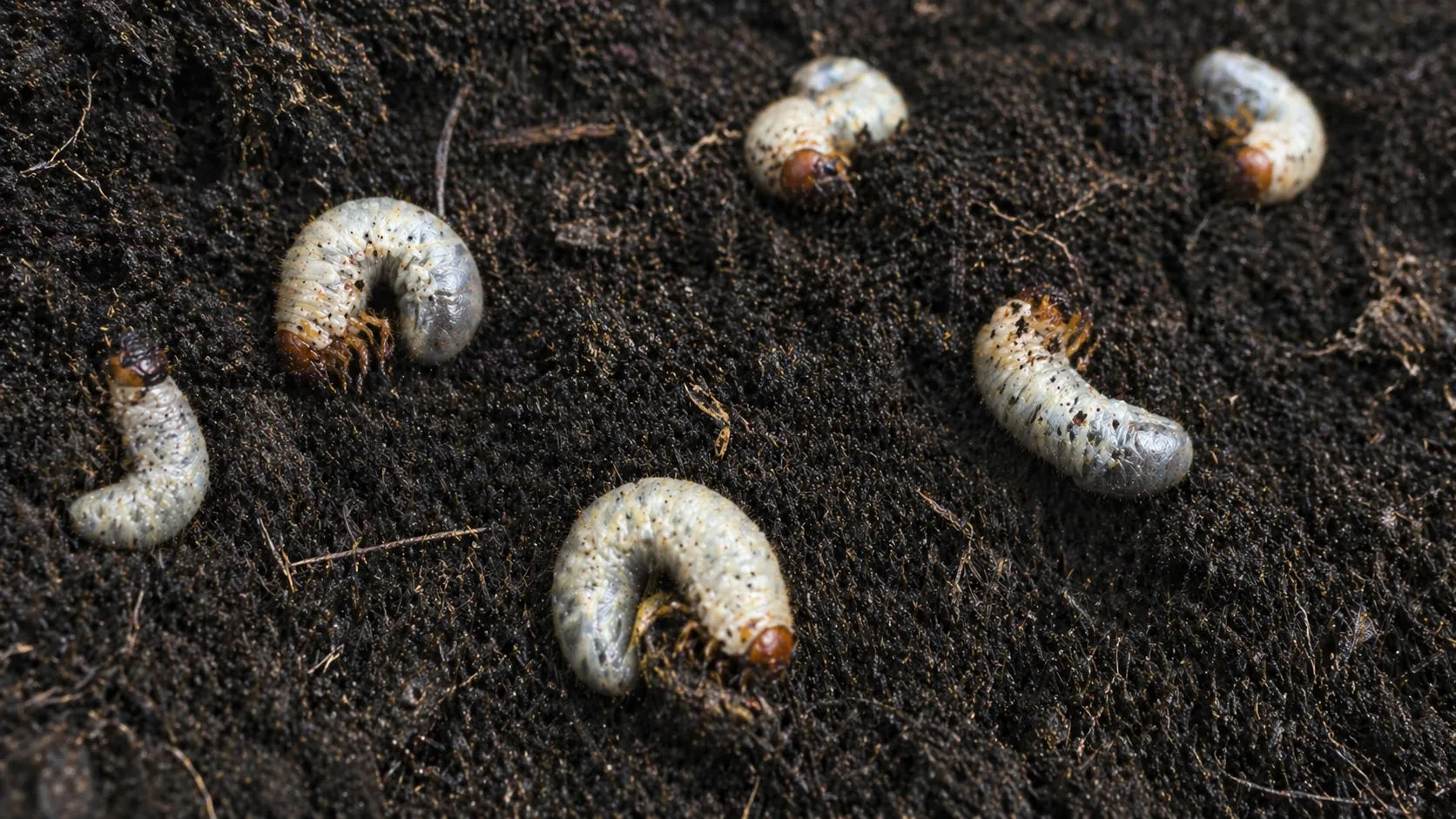
White grubs are the larvae of various beetles, such as the European chafer, Japanese beetle, and common June beetle. They feed on grass roots, causing yellow or brown patches.
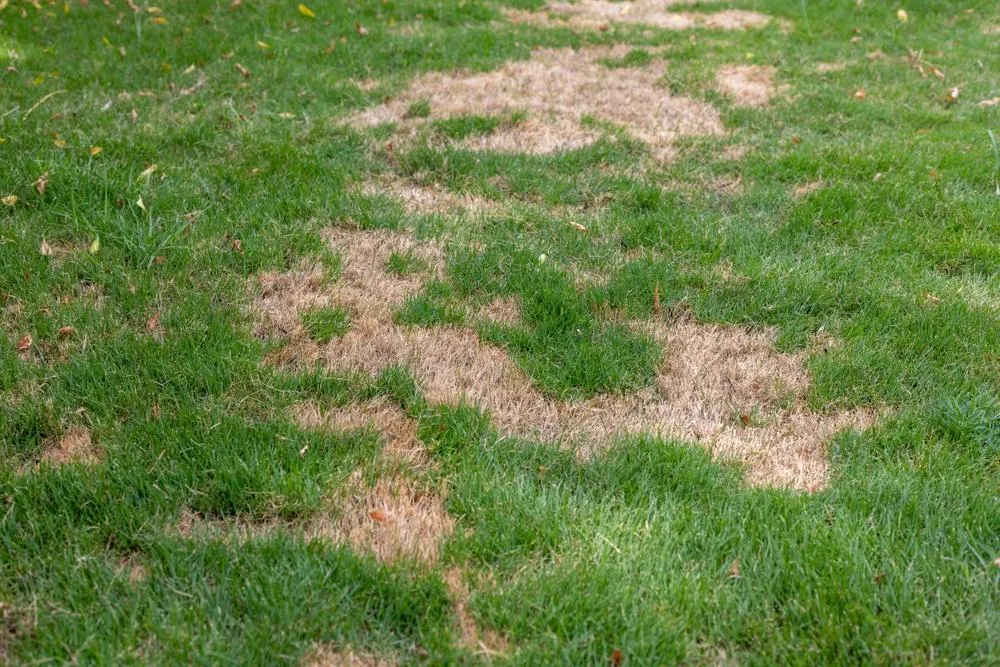
Dead giveaway: if you pull on a patch of grass and it lifts up like a carpet with no resistance, you’re likely dealing with white grubs. You’ll see curled white larvae in the soil.
Life cycle in Quebec 📅:
- June–July → beetles lay eggs
- July–September → larvae hatch (most damaging phase)
- Fall–winter → larvae go deep into the soil
- Spring → larvae feed briefly before becoming adults
Treatment:
- Nematodes, available at most garden centers in Quebec, provide an effective biological treatment against these larvae — no pesticides needed. Species like Heterorhabditis bacteriophora parasitize and kill the larvae. Keeping the lawn healthy (deep watering, proper mowing height) also helps control these pests.
- Chemical options: Pesticides exist, but are heavily regulated in Quebec for environmental reasons. Many traditional options are restricted or banned.
Hairy Chinch Bug
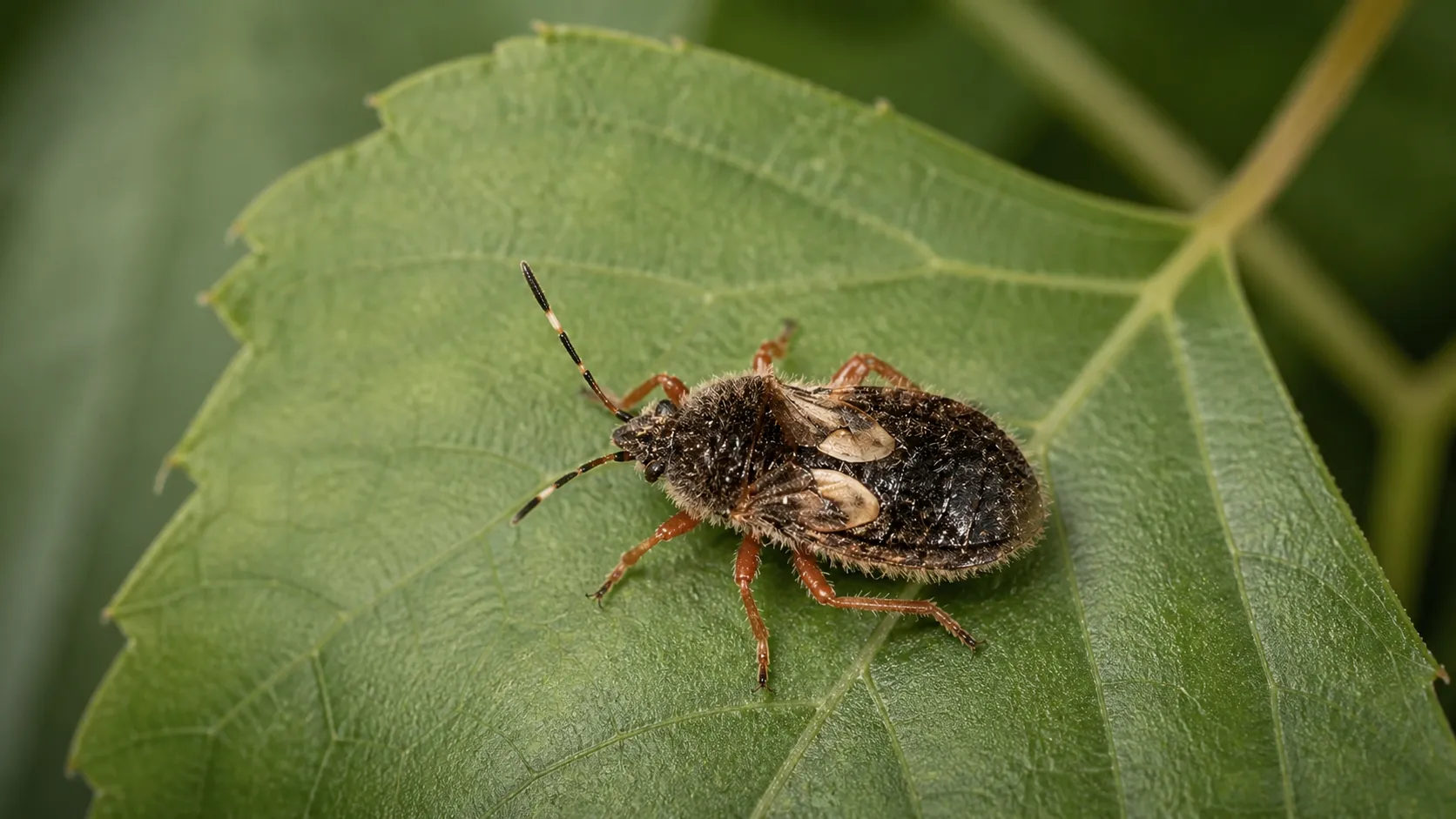
The hairy chinch bug is a small insect (2–4 mm). Adults are black with white wings. Nymphs are reddish or orange with a white band. They live on the soil surface, among the grass blades.
The chinch bug pierces grass blades at the base — it doesn’t feed on roots, but injects toxins that dry out the plant. Visible damage: irregular yellow patches that turn orange-brown, with a “drought” look even when you water regularly.
Life cycle in Quebec 📅:
- Late spring → summer: active
- June–August: peak damage
- Prefer: heat, dry lawns, poor soil
- By the time patches are clearly visible, it’s often too late to intervene effectively.
How to control them:
- Inspecting your lawn in May or June is the best strategy.
- Deep, regular watering
- An insecticidal soap, available over the counter, can contain the infestation if caught early.
How to tell them apart from white grubs:
- White grubs → grass lifts easily (roots destroyed)
- Hairy chinch bug → grass looks dry but stays rooted
The Most Common Mistakes Quebec Homeowners Make
- Mowing too short — weakens the roots and encourages weeds
- Fertilizing during a heat wave — risks burning the lawn
- Ignoring municipal watering regulations — fines apply in several cities
- Waiting for visible damage in July–August before treating insects — often too late
- Skipping spring aeration — compacted soil blocks water and nutrients from reaching the roots
- Cutting more than one-third of the grass height in a single mow
Quebec Lawn Care Checklist
Here’s a simple checklist you can follow throughout the season:
A Healthy Lawn Takes Time — and Sometimes, a Hand
Lawn care in Quebec means following a calendar from May to October. Every task done at the right time makes a visible difference. But when the work piles up, outsourcing is a fast and accessible option.
Post your project on Neat and get offers from local landscapers — directly, no middleman
Sources
- Espace pour la vie — data on lawn care calendar, aeration, mowing, and common Quebec lawn pests
- Ville de Québec — lawn watering bylaw (one day per week, maximum two hours, starting July 2026)
- Ville de Vaudreuil-Dorion — bylaw no. 1821 prohibiting lawn watering with potable water since January 2026